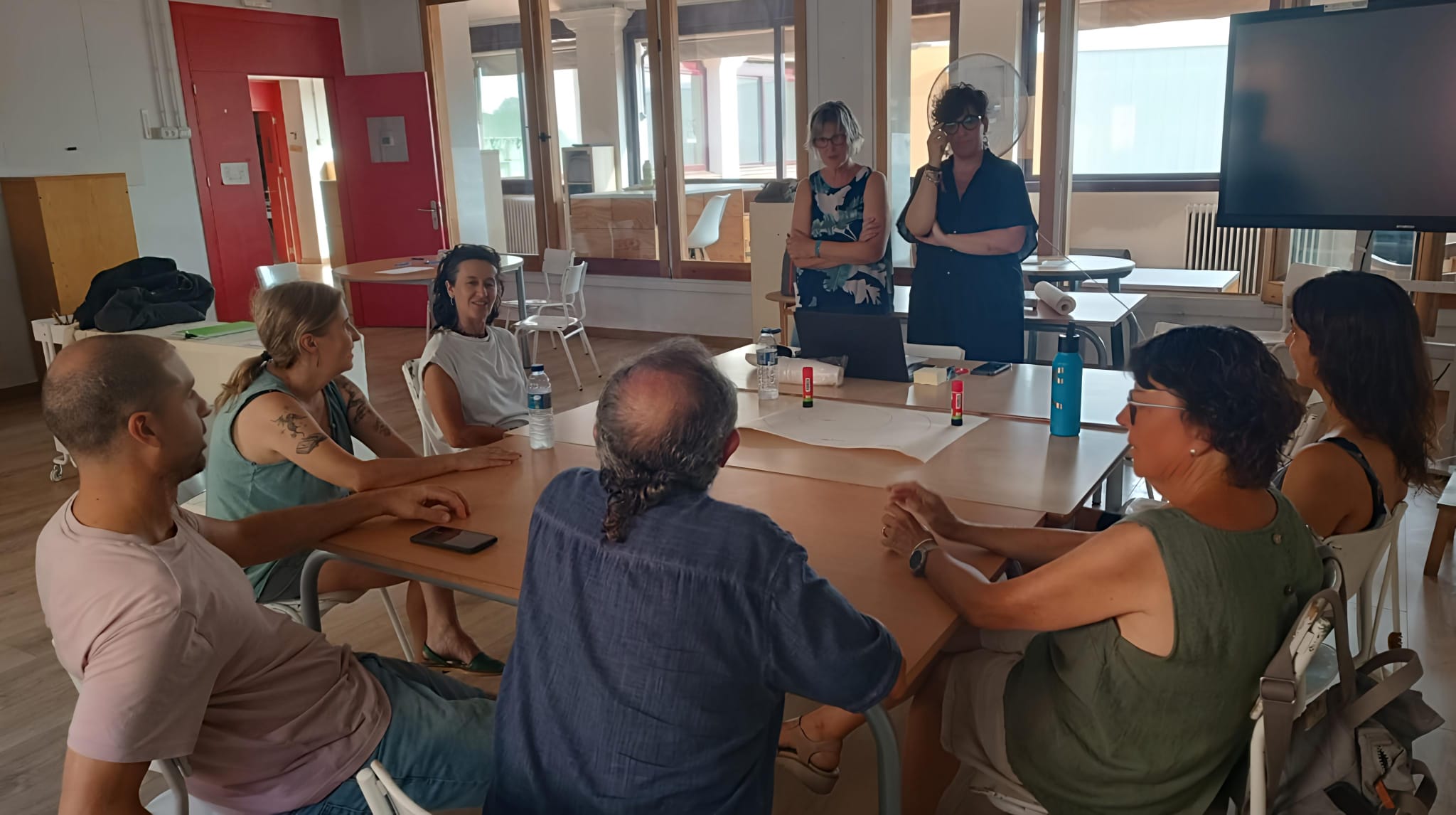
On 16 July, Cooperativa Santperenca d’Energia Sostenible (COSPES) organised a participatory Stakeholder and Social Gap Analysis workshop at Institut Escola Josep Maria Xandri, contributing to the PVSmile project’s work on more inclusive and participatory energy communities.
The workshop brought together 9 participants, including members of COSPES’ governing board and people from outside the board, such as cooperative and founding members, representatives of local associations and the cooperative’s employee. A facilitator, timekeeper and note-taker supported the discussion.
Preparation for the workshop began during COSPES’ regular governing board meetings, where members discussed which people and stakeholder groups in the municipality would be particularly valuable to involve.
Once a list of potential participants had been agreed, COSPES contacted them individually by phone and WhatsApp to explain the purpose of the workshop and invite them to participate. A dedicated WhatsApp group was then created to share information about the activity, the topics to be discussed and the proposed schedule.
This personalised approach helped the cooperative create a space where people with different relationships to the local energy community could contribute their experiences and perspectives.
Identifying stakeholders and social gaps
Throughout the workshop, participants worked step by step through the stakeholder and social gap mapping process, with everyone given the opportunity to contribute.
The discussion explored the cooperative’s existing stakeholder ecosystem, the relationships between different local actors and, importantly, the people and groups that remain insufficiently represented.
Particular challenges were identified in reaching groups such as:
- young people;
- elderly people;
- people who do not own their homes;
- migrants;
- people living in dispersed rural areas.
The workshop generated active participation and a lively exchange of ideas. Notes and participant profiles collected during the session are now being analysed for integration into the PVSmile Stakeholder and Social Gap Mapping framework.
COSPES also sought to include stakeholders who were unable to attend in person. Post-workshop surveys were sent to four people whose perspectives were considered particularly valuable, including representatives connected to Social Services and local scout associations.
This additional engagement helped broaden the analysis and ensure that the mapping process did not rely only on those able to participate in the workshop itself.
The exercise also highlighted the important role played by COSPES’ governing board, which acts as a central connection point between many of the stakeholders identified during the process.
One of the main lessons from the activity was that understanding who is missing from the energy community — and why — is essential for improving participation and inclusion.
The workshop also demonstrated the value of strengthening relationships with local associations, which can help the cooperative build new partnerships and reach groups that may otherwise be difficult to engage.
With its strengths, weaknesses and participation gaps now being mapped, COSPES can move from analysis towards concrete actions aimed at making the cooperative more accessible and inclusive.
The results will contribute to PVSmile’s wider work on stakeholder participation, inclusive governance and ensuring that community energy models respond to the needs of diverse groups within local communities.